
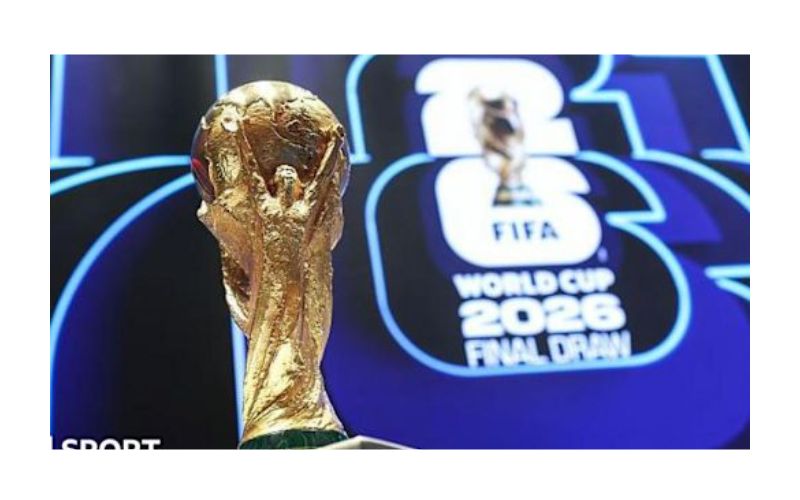




FIFA wanted bigger. But did they accidentally make it… worse?
Okay, let’s be real for a second.
When FIFA announced they were expanding the World Cup to 48 teams, most of us were excited. More countries. More fans. More football. What’s not to love?
Well… as it turns out, quite a bit.
As we’re watching the group stage of World Cup 2026 unfold, something feels… off. And matches like Australia vs Paraguay and Austria vs Algeria are making us ask some uncomfortable questions.
Is bigger actually better? Or did FIFA accidentally create a system where losing doesn’t really matter anymore?
Remember When the World Cup Actually Had Stakes?
Let me take you back for a second.
The old format was simple. Brutal, but simple.
- 32 teams
- 8 groups of 4
- Top 2 advance. Everyone else? Pack your bags and go home.
That was it. No safety nets. No second chances. Every match mattered. Every goal could be the difference between glory and heartbreak.
Now? We’ve got:
- 48 teams (because why not?)
- 12 groups of 4
- Top 2 qualify automatically
- AND the 8 best third-placed teams also go through
So basically, 32 teams make it to the knockout stage. That’s TWO-THIRDS of the entire tournament.
Which raises the question… is it now harder to get ELIMINATED than to qualify?
The Australia vs Paraguay Situation: Let’s Be Honest Here
Okay, so here’s the deal.
Australia and Paraguay are both sitting on 3 points going into their final group match. A draw gives both teams 4 points. And 4 points? That’s almost certainly enough to sneak through as one of the best third-placed teams.
So what happens?
Both teams have a massive incentive to just… not lose. To play it safe. To avoid taking risks.
Now, I’m not saying there’s anything dodgy going on. These are professional athletes. They want to win.
But the FORMAT itself creates this weird situation where a cautious, conservative game is actually the smartest strategy.
And honestly? Is that what we want from the World Cup?
Austria vs Algeria: This One’s Even Trickier
Here’s where it gets really interesting.
Austria vs Algeria is the LAST group match to be played. So both teams will know EXACTLY what result they need to qualify.
Every goal in every other group. Every yellow card. Every tiebreaker scenario.
They’ll have all the information. And that changes everything.
If a draw gets both teams through? Why would they risk attacking?
If one team needs a win and the other is already through? Suddenly the dynamics get weird.
Algeria fans might be having flashbacks right now. Because in 1982, something similar happened…
The 1982 “Disgrace of Gijón” — History Repeating?
Okay, football history lesson time.
In 1982, West Germany and Austria played a match where a narrow German win would send BOTH teams through and eliminate Algeria.
West Germany won 1-0. Algeria went home. And the match was so obviously manipulated that it became known as the “Disgrace of Gijón.”
FIFA’s solution? Make all final group matches kick off at the same time. No one knows what’s happening elsewhere. No one can calculate their way to a convenient result.
But with the 48-team format? That solution might not work anymore.
Because when you have third-placed teams qualifying from different groups, teams can still calculate. They can still strategize. The bracket becomes a puzzle to be solved rather than a competition to be won.
Wait, Could Losing Actually Be BETTER Than Winning?
This is where it gets properly wild.
Imagine this scenario:
- You finish SECOND in your group → You face the group winner from a really tough group. Maybe a tournament favorite.
- You finish THIRD in your group → You face a different opponent. Maybe an easier one.
What do you do?
Sure, professional athletes want to win. But coaches? They think about the bracket. They think about the path to the final.
If finishing third gives you an easier route, there’s a weird incentive to… not try as hard? To rest players? To experiment?
That’s not a conspiracy theory. That’s just basic game theory.
And FIFA created this situation.
Weather Delays Could Make Everything Worse
Here’s something nobody’s really talking about.
What if a match gets delayed? Lightning. Heavy rain. Whatever.
FIFA rules say one match can continue even if the other game in the same group is suspended.
So imagine this — your match gets delayed. You come back hours later. And you know EXACTLY what happened in the other game.
You know if you need to attack. You know if you can defend. You know everything.
Is that fair? Is that competitive?
Or is it just another flaw in a system that wasn’t really thought through?
Has the Group Stage Lost Its Magic?
Think about the 2022 World Cup for a second.
Remember those final group matches? The tension? The drama? Teams getting eliminated in real-time as goals went in across different stadiums?
That’s what made the World Cup special.
With 8 third-placed teams advancing, that tension is gone. More teams survive. Fewer matches matter.
It’s like watching a reality show where nobody gets eliminated until the finale. Where’s the drama in that?
Why Did FIFA Even Do This?
Look, I get it. FIFA President Gianni Infantino wanted to grow the game.
More countries get to experience the World Cup. Smaller football nations get their moment in the spotlight. It’s inclusive. It’s global.
And honestly? Those are good things.
But at what cost?
If the group stage becomes a glorified qualifier where nobody really gets knocked out until the knockout rounds… what’s the point?
The quality might drop. The urgency definitely drops. And the World Cup loses some of what made it special.
So… Is the 48-Team Format Actually Broken?
Here’s the honest answer — it’s complicated.
More teams = more fans = more global interest. That’s genuinely good for football.
But the structure? The third-place qualification? The incentives to play it safe?
Yeah, FIFA needs to take a long, hard look at this.
Because when matches like Australia vs Paraguay and Austria vs Algeria become about calculating qualification rather than winning football matches… something’s gone wrong.
What Do YOU Think?
I’m genuinely curious about this one.
Are you loving the expanded format? More teams, more drama, more football?
Or do you miss the old days when every group match felt like a knockout?
Drop a comment below and let me know. And while you’re at it — who’s your dark horse pick for this World Cup?
Let’s get the conversation going! 👇
Loved this breakdown? Share it with your football-obsessed friends and let’s see what they think about FIFA’s big experiment.
Key matches to watch:
- Australia vs Paraguay — will they play for a draw?
- Austria vs Algeria — will knowing the results change how they play?
- Every final group match — because suddenly, nothing’s as simple as it used to be.
Also Read Algeria vs Austria: Winner Takes All in World Cup 2026 Group J Showdown

Leave a Reply